
Introduction
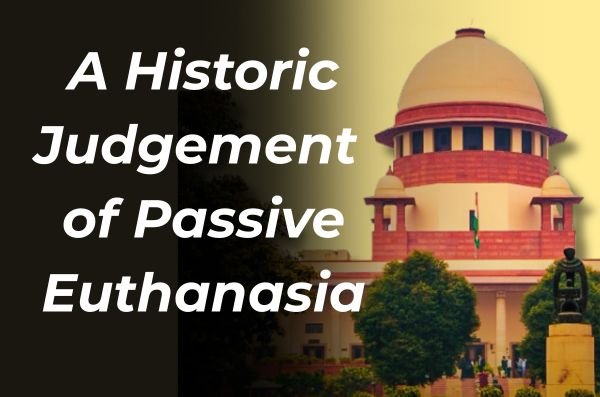
The Supreme Court of India approved passive euthanasia for a 32-year-old man, Harish Rana. He was in a coma and vegetative state for more than 10 years.
It is a historic landmark judgement in India that approved the “Right to Die with Dignity.” It has become the first such case of passive euthanasia in the history of the Indian judicial system.
Harish Rana Case and the Supreme Court’s Approval
Harish Rana was a student from Punjab University and was suffering from a severe head injury after falling from the fourth floor of his PG accommodation. He was in a Persistent Vegetative State (PVS) for the last 13 years.
A Persistent Vegetative State (PVS) is a disorder of consciousness in which the person is awake but unaware. This condition is often called ‘unresponsive wakefulness syndrome.’
He had been provided with all types of medical treatments and therapies by his parents. But the parent said, there were no signs of his health improvement and medical therapy offered no hope for recovery.
After a decade of failed therapies, parents petitioned the Delhi High Court in 2024 to seek permission to withdraw life support, but the court rejected the plea.
Later, the family approached the Supreme Court of India to seek permission. A bench of Justices JB Pardiwala and KB Vishwanathan approved the withdrawal after receiving advice from two medical boards.
The court said that withdrawal must be carried out in a structured and dignified manner. And it must be executed sensitively to ensure the patient suffers least pain possible.
Moreover, the final right to decide should rest with exhausted family members who wish to see loved ones free from further pain.
The Supreme Court has also urged the Parliament to act on “Living wills” and end-of-life legislation to address unanswered questions about patient rights.
Understanding Euthanasia
Euthanasia is the practice of intentionally ending a patient’s life to relieve pain and suffering. It is primarily done in case of an incurable or terminal medical condition.
What are the Types of Euthanasia?
There are two types of euthanasia, namely passive euthanasia and active euthanasia.
Passive Euthanasia
It is an intentional act of letting a patient die by withholding or withdrawing life support or necessary medical treatment.
Active Euthanasia
It is a process where a medical professional intentionally uses lethal injection or medication to end the patient’s life to free patient from the extreme suffering of an incurable condition.
Global Perspective and Practice
Passive euthanasia widely accepted in UK, USA, and now, through legal precedent, India. India only permits passive euthanasia under strict medical supervision. Passive euthanasia was legalised in India in 2018.
On the other side, active euthanasia is legal in Netherland, Canada and Belgium but it is illegal in India.
Legal frameworks in India
Aruna Shanbaug Case, 2011
Passive Euthanasia was legalized in India under strict judicial guidelines. The court recognized that the “Right to Life” under Article 21 of the Indian Constitution includes the “Right to Die with Dignity.” This case also paved the way for further legalization of “Living Wills”
Common Cause Judgement, 2018
The court official recognized the legality of Advance Medical Directives or Living Wills. It provided multi-layered strict process to prevent misuse. It firmly established the “Right to Die with Dignity” as part of the Fundamental Rights. That comes under Article 21 of the Indian Constitution.
In 2023, the Supreme Court of India simplified the rules to make the process easy and practical.
Conclusion
The Harish Rana Case 2026 marks a historic milestone as the first case of practical application of passive euthanasia. It was legalized in India under strict guidelines after the Aruna Shanbaug Case in 2011. Moreover, there is a need to acknowledge the unanswered questions and provide comprehensive formal legislation to address the concerns.