
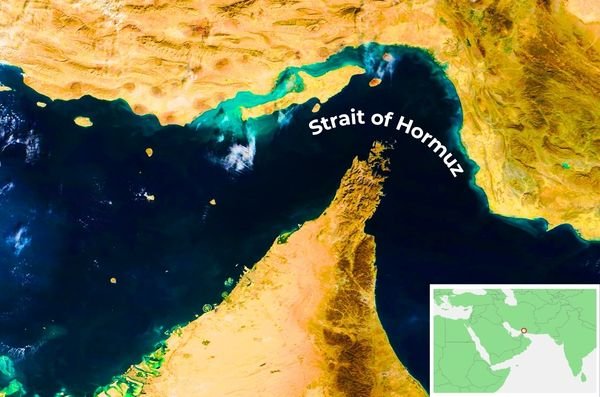
The Strait of Hormuz
The Strait of Hormuz is one of the geo-strategically important chokepoints in the Middle East region. It is a 33 km narrow sea route, which connects the Persian Gulf to the Gulf of Oman and the Arabian Sea.
It is located at the south of Iran and to the North of Oman and United Arab Emirates. It is a crucial waterway for all of the surrounding oil-rich countries because they are heavily dependent on this sea route for their oil exports.
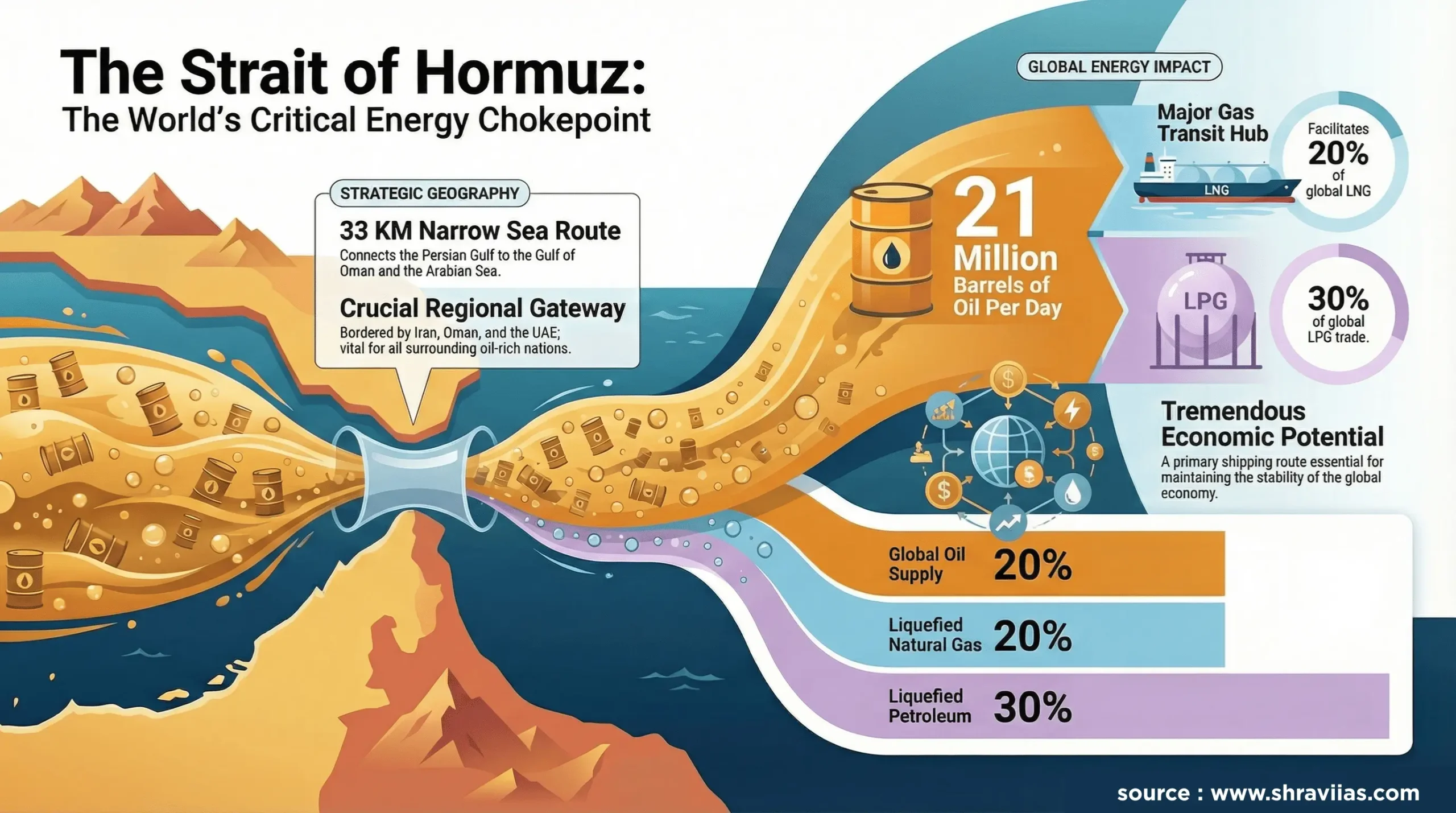
The world’s 20 percent global oil supply passes through that sea route. It is almost one-fifth of total global oil consumption. In other words, approximately 21 million barrels of oil per day pass through that waterway.
Additionally, a large volume of gas passes through that route, which includes approximately 20 percent Liquefied Natural Gas (LNG) and about 30 percent Liquefied Petroleum Gas (LPG) of the world’s total trade.
It is one of the significant shipping route in the world, which holds tremendous potential for the global economy.
Why It Matters for the World
Geopolitical and strategic Importance
- It is one of the geopolitically sensitive territories in the Middle East. That plays a vital role in shaping the world geopolitics.
- The Strait of Hormuz also provides a great advantage and leverage in international diplomacy to counter the power balance. It means it gives an extra edge and power to the region to negotiate agreements and build cooperation.
Global Trade and Economic Balance
- This narrow water stretch is just a 33 km wide route, but it is the backbone of many economies, including European, Asian and other economies. Therefore, disruption of this sea route means recession in the global markets.
- All of the surrounding countries are heavily dependent on this narrow chokepoint for trade with the entire globe. Therefore, it is a significant lifeline for all of these countries.
- This region holds tremendous potential of influencing and changing the World economy.
Energy Security and Stability
- It is one of the busiest shipping routes in the world, which carries a large portion of energy, including oil, natural and petroleum gas, and fertilisers.
- The turmoil in that region suddenly impacts the global economy on a large scale because it primarily hurts the world’s 20% energy security. For instance: disruption in the Middle East has led to a rise in oil and gas prices in the international market.
Digital Infrastructure and Connectivity
- Moreover, the region provides all-time internet connectivity for Asia, Europe and Africa as a dense web of fiber-optic undersea cables lies beneath the water of that region. Hence interruption in the region means, huge losses for other parts of the world.
Conclusion
The Strait of Hormuz plays a crucial role not only in the global economy but also has a transformative role in the regional and domestic economies. Therefore, any change in that region can completely shift or reshape geopolitics, the global economy, and the world order.
Also Read: